A Workout, a Leaderboard, and Ecclesiastes
I finished the workout, logged my time on the leaderboard, and went home exhausted. Later that day, I opened my Bible and found myself in Ecclesiastes. Almost immediately, the connection felt unavoidable.
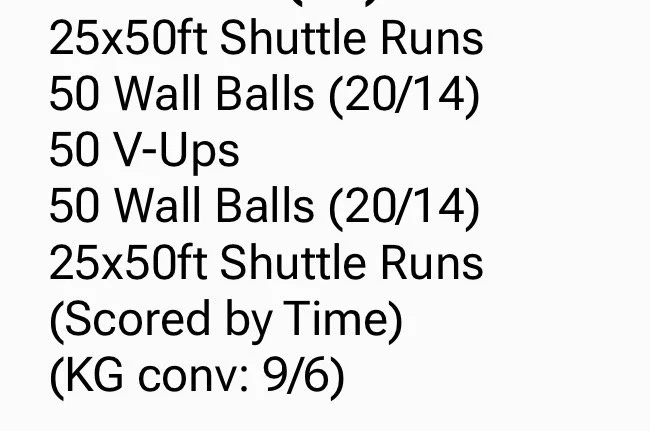
The workout itself was simple on paper: shuttle runs, wall balls, V-ups, wall balls again, then more shuttle runs—scored by time. It was hard, repetitive, and demanding. When I finished, I checked the leaderboard. My name was there, my time recorded alongside others. For a moment, it mattered. By tomorrow, it won’t. The next workout will go up, new scores will replace old ones, and today’s effort will quietly disappear. That realization echoed the words of Ecclesiastes: “Meaningless! Meaningless! … Everything is meaningless.” (Ecclesiastes 1:2)
The shuttle runs set the tone. Back and forth across the same stretch of floor, over and over again. You move constantly but end up where you started. It reminded me of Ecclesiastes 1:5–7, where the sun rises and sets, the wind blows in circles, and streams run to the sea but are never full. Motion without arrival. Effort without finality. The workout wasn’t trying to hide that reality—it put it on full display.
Then came the wall balls and V-ups. Fifty reps, then fifty more. I remember thinking halfway through that I’d already done this once today—why am I doing it again? Ecclesiastes answers that question bluntly: “What has been will be again, what has been done will be done again.” Life, like this workout, often loops back on itself. Tasks repeat. Struggles resurface. Progress feels real, but it rarely feels permanent.
The workout was scored by time, and that may be the most Ecclesiastes-like detail of all. Time doesn’t care how strong you feel or how badly you want to stop. You don’t defeat it; you endure it. Ecclesiastes wrestles with that same tension—our deep desire to master time and our complete inability to do so. The clock kept running, just as it always does, indifferent to effort or ambition.
And yet, Ecclesiastes isn’t despair—it’s honesty. The book doesn’t deny effort; it reframes it. “A person can find satisfaction in their own toil—this too, I see, is from the hand of God.” (Ecclesiastes 2:24) The leaderboard will be forgotten tomorrow, but the work was still real. The discipline still mattered. The suffering still shaped something in me, even if no one remembers the score.
That’s what this workout taught me before Ecclesiastes ever put words to it. The value wasn’t in my ranking or my time. It was in showing up, finishing what was in front of me, and accepting that not everything has to last to be meaningful.
Tomorrow, the leaderboard resets. The workout changes. The cycle continues. And somehow, Ecclesiastes says, that’s not a problem—it’s simply life.